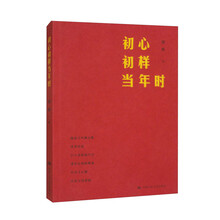
本书论证了外语教学“费时低效”的主要原因之一在于学界对外语语用能力系统研究的缺少,语用能力习得与发展是外语语境下第二语言教学面临的严峻挑战,而应对这一挑战急需解决的关键问题是对学习者语用能力的有效解释和分解。在此基础上,本书以语用学的社会认知研究模式、认知语言学理论和当代语用学的认知研究取向为理论依据,结合第二语言或外语教学中存在的语用习得问题以及国内外学者对交际能力和语言教学目标研究的新成果,探究外语语境下语用能力的认知成分构建,并对语用能力的认知构建成分进行了尝试性的验证。
Contents
Foreword (1)
Chapter OneIntroduction (7)
1.1Research background (8)
1.2Objectives of the study (14)
1.3Significance of the study (17)
1.4Organization of the book (22)
Chapter TwoTheoretical Developments of Pragmatic Competence
in FL/EFL Teaching (24)
2.1The study of pragmatic competence in second or foreign
language learning (26)
2.1.1Pragmatic competence: A new and old topic (27)
2.1.2Establishment of interlanguage pragmatics: the central
concern of pragmatic competence (30)
2.1.3Pragmatic competence: the crux of second or foreign
language learning (37)
2.2The issue of pragmatic competence in second or foreign
language teaching (40)
2.2.1Insufficient interpretation of communicative competence
in FL/EFL teaching (40)
2.2.2Inadequacies of studying pragmatic competence in
interlanguage pragmatics (44)
2.3The distinction between SL/ESL and FL/EFL in light of
pragmatic competence (47)
2.3.1The necessity for drawing a distinction between SL/ESL
and FL/EFL (48)
2.3.2Distinguishing SL/ESL from FL/EFL: A paradox in
applied linguistics abroad (51)
2.3.3Observing distinctions between SL/ESL and FL/EFL
in China (61)
2.3.4Pragmatic competence highlighting the distinction (66)
2.4Pragmatic competence: A serious challenge to current
FL/EFL teaching (75)
2.4.1A discussion on the differences of the instructional
objective (75)
2.4.2Context and pragmatic acquisition in FL/EFL
teaching (79)
2.4.3Pragmatic competence as the key point in FL/EFL
teaching (86)
2.5Summary (90)
Chapter ThreeThe Need for Reconsidering the Construct
of Pragmatic Competence (92)
3.1The concept of pragmatic competence in the development
of language competence (93)
3.1.1Evolution of language competence (93)
3.1.2Emergence of pragmatic competence in the advent of
communicative competence (97)
3.2Pragmatic competence: the source of controversies about
communicative competence (103)
3.2.1The terminology used for language competence (105)
3.2.2Various models of communicative competence (107)
3.2.3Recent interpretations of second language
proficiency (114)
3.3Features reflected in various models and interpretations of
communicative competence (133)
3.3.1New perspectives (134)
3.3.2Multidimensional views (140)
3.3.3A complement to pragmatic components between
traditional models and recent interpretations of L2
language competence (147)
3.4Reconsidering the construct of pragmatic competence (149)
3.4.1A comprehensive construct of pragmatic
competence (150)
3.4.2Reconsidering the construct of pragmatic competence:
A cognitive approach (153)
Chapter FourRationales Underlying a Cognitive Approach to
the Construct of Pragmatic Competence (157)
4.1Pragmatic theories applied to the current construct of
pragmatic competence (158)
4.1.1Theoretical grounds for the concept of communicative
competence (158)
4.1.2Pragmatic theories applied to the study of second
language pragmatics (162)
4.1.3Analysis of pragmatic theories used in the construct of
pragmatic competence (164)
4.2A cognitive linguistics approach to the study of
pragmatics (167)
4.2.1The connection between pragmatics and cognitive
linguistics (168)
4.2.2The study of pragmatics from the perspective of cognitive
linguistics: An introduction to Kecskess sociocognitive
approach to pragmatics (173)
4.3The theoretical significance of SCA for the theme of this
research (180)
4.3.1The cognitive view of context conceptualization in
pragmatics (181)
4.3.2The model of the meaning value of words (188)
4.3.3Conceptual knowledge: the key point in developing L2
pragmatic competence (195)
4.4Theoretical explanation for the extended construct of
pragmatic competence (207)
4.4.1Contextualized competence (208)
4.4.2Intercultural competence (212)
4.4.3Metaphorical competence (219)
4.5Summary (225)
Chapter FiveThe Experiment (227)
5.1Research questions of the experimental test (227)
5.2Research methodology (231)
5.2.1Subjects (231)
5.2.2Methods and test design (233)
5.2.3Procedures (238)
5.2.4Results (238)
5.3Discussion (245)
5.3.1Validation of the cognitive approach (245)
5.3.2Issues of pragmatic acquisition and development (246)
5.3.3Explanatory power of the cognitive approach (248)
5.4Summary (253)
Chapter SixConclusion (255)
6.1General summary (255)
6.2Implications for foreign language education (257)
6.2.1Readdressing the implications in specifying the
goal of FL/EFL teaching (257)
6.2.2Pragmatic competence as the theoretical ground for
contentbased instruction (259)
6.2.3The use of translation in improving L2 pragmatic
competence (261)
6.2.4An implication for vocabulary acquisition in EFL
teaching (263)
6.3Limitations and directions for future studies (264)
Bibliography (267)
Appendices (288)
List of Tables and Figures
Table 3-1Components of communicative competence (109)
Table 3-2A summary of components of communicative competence/
language proficiency (143)
Table 5-1Subjects’ selfevaluation of English proficiency (233)
Table 5-2Subjects’ selfevaluation of pragmatic proficiency,
pragmatic teaching and learning (239)
Table 5-3Comparison of 4 groups’ responses of Item
14-15 (242)
Table 5-4Percentage of subjects’ correct responses in comprehension
test of pragmatic competence (243)
Table 5-5Results of the comprehension test on pragmatic competence
by Taiwanese college students (244)
Figure 3-1A comprehensive construct of pragmatic
competence (152)
Figure 3-2A summary of the traditional construct of pragmatic
competence (153)
Figure 3-3A tentative comprehensive construct of pragmatic
competence (154)
温馨提示:请使用宁波大学园区图书馆的读者帐号和密码进行登录